For years, Mumbai has been closely associated with luxury real estate in India. Addresses such as Worli, Bandra West and South Mumbai have carried a level of prestige that few other markets could match. But the luxury housing map is changing.
Gurgaon, meanwhile, has been steadily building its own place in India’s luxury housing market. Premium residential developments, better connectivity and strong corporate growth have brought more high-end buyers to the city, particularly those looking for larger homes. The scale of this demand became evident in 2025. Homes priced at ₹10 crore and above generated ₹24,120 crore in sales in Gurgaon, higher than Mumbai’s ₹21,902 crore (mentioned in a report by India Sotheby’s International Realty and CRE Matrix).
So, what explains this change? And when comparing a property in Gurgaon with a property in Mumbai, what really separates the two markets?
How Gurgaon Overtook Mumbai to Become the Next Luxury Real Estate Giant
Gurgaon’s rise didn't happen overnight. The city has spent years developing from a corporate hub into a more extensive residential and lifestyle destination.
The latest numbers show just how quickly its high-end segment has expanded. The value of Gurgaon’s ₹10 crore-plus home transactions increased from ₹4,004 crore in 2023 to ₹24,120 crore in 2025. The average ticket size in this segment was around ₹16 crore, while homes of approximately 5,000 sq. ft. formed a significant part of demand.
The difference is also visible in the type of housing being developed. Gurgaon has large parcels of land that allow developers to establish expansive gated communities, large-format apartments, landscaped environments and amenity-rich projects. Mumbai, by comparison, operates within much tighter land constraints, particularly in established premium locations.
That has helped Gurgaon develop a luxury residential proposition centred around space, privacy, newer construction and planned communities.
The rise of corridors such as Golf Course Road, Golf Course Extension Road and Dwarka Expressway has added another dimension. According to the same report, transaction value on Dwarka Expressway increased sharply in 2025, while Golf Course Extension Road also recorded strong growth.
Mumbai, meanwhile, continues as a formidable luxury market. Its strength comes from established premium neighbourhoods, limited land supply, deep employment centres and the prestige associated with addresses such as Worli and Bandra West.
The story, therefore, is less about Mumbai disappearing from the luxury map and more about Gurgaon becoming large enough to redraw it.
Are Gurgaon Offering Better Luxury Properties Than Mumbai?
“Better” depends heavily on what a buyer expects from a luxury home. Thankfully, real estate has not yet developed a universal luxury button that magically tells everyone what they should want.
For buyers comparing a luxury property in Gurgaon with a luxury property in Mumbai, the biggest difference often comes down to space and location.
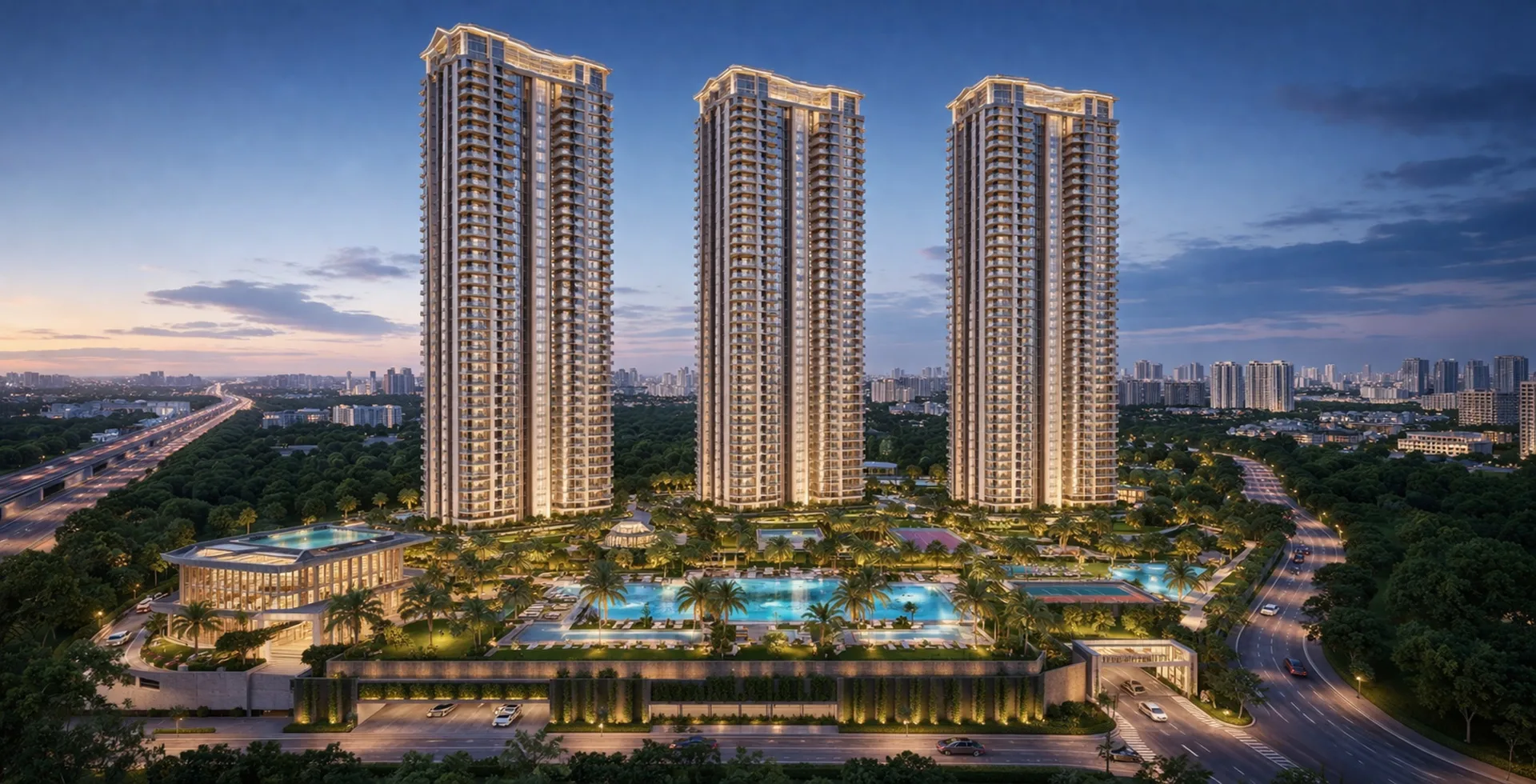
Gurgaon has greater scope for large-format residences. The city’s premium projects often include spacious apartments, extensive clubhouses, landscaped open areas, multiple recreational facilities and gated-community living. DLF The Camellias, for instance, is part of the Golf Course Road luxury ecosystem and is known for large residences, golf-course surroundings and a high-end residential environment. The project’s official website describes its 16 towers, extensive green setting and vicinity to two golf courses.
Newer developments are also pushing the format further. DLF Privana South in Sectors 76 and 77 offers large-format 4 BHK residences of approximately 3,577 sq. ft. and forms part of the larger DLF Privana ecosystem. DLF states that the wider development spans 116 acres, while the project is positioned around major road corridors including NH-48, the Dwarka Expressway and Southern Peripheral Road.
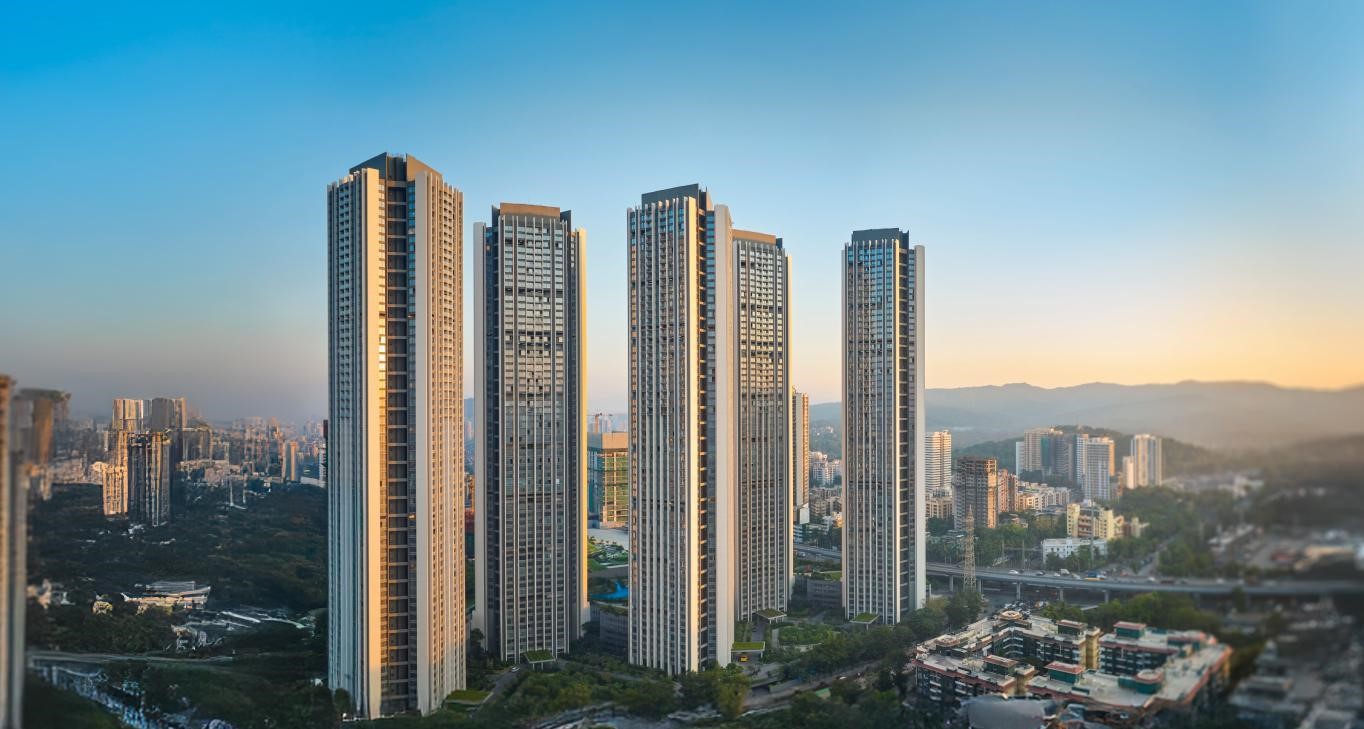
Mumbai offers a different form of luxury. A luxury apartment in Mumbai often derives significant value from its address, views and access to established business and lifestyle districts. A home in Worli, for example, can offer access to the sea, the Bandra-Worli Sea Link, South Mumbai and major business districts.
Godrej Trilogy in Worli illustrates this model. The project offers 3 and 4 BHK residences with views towards the Arabian Sea, Mahalaxmi Racecourse and Mumbai skyline, while its location provides access to BKC, Lower Parel and Nariman Point.
In simple terms, Gurgaon’s luxury market often sells scale and planned living, while Mumbai’s premium market places considerable emphasis on address, scarcity and established urban access.
How Are Infrastructure and Connectivity Changing the Luxury Housing Map of Gurgaon?
At this price point, along with the luxury apartments with premium interiors and amenities, buyers are also paying for the ability to move through the city without any chaos. This is where Gurgaon’s infrastructure story becomes important.
The city’s major residential corridors are increasingly connected through expressways, arterial roads and broadening public transport infrastructure. The Dwarka Expressway has become particularly important for the development of new residential and commercial zones, while Gurgaon’s proximity to IGI Airport strengthens its appeal to frequent business travellers, corporate executives and NRIs.
For years, Golf Course Road has been associated with Gurgaon’s high-end housing market. That demand has gradually spread to Golf Course Extension Road, and more recently, to Dwarka Expressway as well. All three locations featured prominently in Gurgaon’s ₹10 crore-plus housing market in 2025, according to the available market data.
For buyers considering property in Golf Course Road, the attraction is therefore not simply premium housing. It is the combination of established residential development, corporate districts, social infrastructure and connectivity.
Similarly, property in Dwarka Expressway represents a newer phase of Gurgaon’s luxury expansion. Large development parcels and improving connectivity have allowed developers to introduce sizeable communities that would be difficult to replicate in Mumbai’s established central locations.
Mumbai is also undergoing crucial infrastructure development, including metro expansion, road improvements and projects designed to improve movement across the metropolitan region. However, its luxury market is built around a far more mature urban structure.
This creates two different models: Gurgaon is using infrastructure to open and strengthen new luxury corridors, while Mumbai is largely using infrastructure to improve access within an already established premium market.
Top Luxury Real Estate Projects in Gurgaon and Mumbai
The difference between the two markets becomes easier to understand when looking at the projects themselves.
Luxury Projects in Gurgaon
DLF The Dahlias: Located in DLF Phase 5, The Dahlias represents the newer generation of ultra-luxury residential projects in Gurgaon. This project sets the bar high for premium housing by becoming the most expansive community housing project in India. Its positioning reflects the city’s growing demand for large-format, high-value homes. The project is registered with Haryana RERA under DLF Limited, with its location listed as R16, DLF 5, Sector 54, Gurugram.
DLF The Camellias: One of Gurgaon’s most established ultra-luxury addresses on Golf Course Road, The Camellias offers large residences, starting from 7,600 sq. ft., within the DLF Golf Course ecosystem. Its official project information features its extensive green surroundings and two 9-hole golf courses.
DLF Privana South: Located in Sectors 76 and 77, DLF Privana South is part of the growing residential belt beyond Gurgaon’s established Golf Course Road. The project is part of the larger Privana development, with spacious residences and community-focused amenities. Its location also puts it close to key roads connecting this part of Gurgaon with other major parts of the city.
Other prominent luxury developments across Gurgaon include DLF The Magnolias, DLF The Aralias, Godrej Aristocrat and other premium developments across Golf Course Road, Golf Course Extension Road and New Gurgaon.
Luxury Projects in Mumbai
Oberoi Three Sixty West: Located in Worli, Three Sixty West is one of Mumbai’s best-known ultra-luxury residential developments. The project integrates luxury residences with The Ritz-Carlton, Mumbai, and offers large 4 and 5 BHK residences, duplexes and penthouses with views of the Arabian Sea and Mumbai skyline.
Godrej Trilogy: Located in Worli, Godrej Trilogy offers 3 and 4 BHK residences positioned around views of the sea, Racecourse and city skyline. Its location also places it close to major business districts and Mumbai’s key road infrastructure.
Lodha Altamount: Located in South Mumbai, Lodha Altamount reflects the importance of location and scarcity in Mumbai’s premium housing market.
Lodha World Towers: Located in Lower Parel, the development illustrates Mumbai’s ability to create large-scale luxury residences within an intensely urban environment.
These projects show that both cities have sophisticated luxury offerings, but their propositions are shaped by different urban conditions.
What Does the Future Hold for Luxury Real Estate in Gurgaon and Mumbai?
The luxury housing markets of Gurgaon and Mumbai are likely to remain important parts of India’s premium residential landscape, although their growth stories are not identical.
Gurgaon enters 2026 with strong momentum in the ultra-luxury segment. The ₹10 crore-plus market expanded dramatically between 2023 and 2025, while emerging corridors such as Dwarka Expressway and Golf Course Extension Road have become increasingly important to luxury housing activity.
The city’s continued corporate expansion, proximity to Delhi and IGI Airport, availability of larger development parcels and appetite for spacious homes could continue supporting demand for luxury property in Gurgaon.
Mumbai, meanwhile, retains several structural characteristics that underpin its premium market. Limited land availability, established employment centres, mature infrastructure and strong demand for prime addresses continue to support property in Mumbai, particularly in established luxury locations.
For someone considering property investment in Gurgaon or property investment in Mumbai, the more useful comparison is therefore not simply about which city recorded a higher number in one year. It is about understanding what creates value in each market.
In Gurgaon, that could mean examining infrastructure, new supply, employment hubs, project quality and the development trajectory of individual corridors.
In Mumbai, factors such as land scarcity, established neighbourhoods, rental demand, connectivity and the long-term appeal of premium addresses can play a larger role.
The same principle applies to end users. Someone searching for an apartment in Gurgaon may place greater emphasis on size, amenities, gated-community living and newer infrastructure. A buyer looking for an apartment in Mumbai may place greater importance on location, views, established neighbourhoods and proximity to business and cultural centres.
Gurgaon’s emergence as a major luxury housing market marks an important change in India’s real estate landscape. In 2025, the city recorded higher transaction value than Mumbai in the ₹10 crore-plus residential segment, according to India Sotheby’s International Realty and CRE Matrix.
But the comparison is not simply about replacing one luxury market with another. Mumbai continues to offer the advantages of an established premium market, while Gurgaon is building a luxury ecosystem around larger homes, new infrastructure, corporate growth and expanding residential corridors.
For buyers, the choice ultimately comes down to what matters most: space or address, newer communities or established neighbourhoods, emerging corridors or mature markets.
The luxury housing market in 2026 is no longer a one-city story. Gurgaon has entered the conversation in a significant way, and Mumbai remains very much part of it.
Frequently Asked Questions (FAQs)
In the ₹10 crore-plus residential segment, Gurgaon recorded ₹24,120 crore in sales in 2025 compared with ₹21,902 crore in Mumbai, according to India Sotheby’s International Realty and CRE Matrix. This specific measure places Gurgaon ahead for that year and price segment.
Gurgaon generally has greater availability of large-format homes because its development areas provide more scope for expansive residential communities. Mumbai’s land constraints make large luxury residences particularly valuable in established premium neighbourhoods.
Golf Course Road, Golf Course Extension Road and Dwarka Expressway are among the prominent luxury residential corridors. Projects such as DLF The Camellias and DLF The Dahlias also contribute to Gurgaon’s high-end residential profile.
Worli, Bandra West, South Mumbai and Lower Parel are among Mumbai’s established premium residential markets. Worli, in particular, has several prominent ultra-luxury developments, including Oberoi Three Sixty West and Godrej Trilogy.
Yes, Gurgaon offers a market shaped by new development, infrastructure expansion, corporate growth and emerging residential corridors. Mumbai has a more mature market shaped by established demand, limited land availability, premium locations and a deep rental ecosystem. Individual property and locality conditions can vary significantly in both cities.
Notable luxury property in Gurgaon include DLF The Dahlias, DLF The Camellias, DLF The Magnolias and DLF Privana South. In Mumbai, prominent examples include Oberoi Three Sixty West, Godrej Trilogy, Lodha Altamount and Lodha World Towers.